Sunday, 3 May 2009

Feria de Abril


Along with Semana Santa, Feria de Abril (April Fair) is one of my two favorite weeks in Sevilla. Feria is a celebration of spring and the coming of summer. Typically, it takes place two weeks after Semana Santa and will be your second of two weeks off school. Essentially, a small city of private tents (casetas) is constructed on the fairgrounds along with a huge area for your typical fair games, rides, and attractions. All the streets are named after bullfighters and are lined with lights and paper lanterns. At the main entrance of the fair grounds a giant gate is constructed covered with lights. The fair begins at midnight of Monday-Tuesday with the lighting of the puerta and continues non-stop (literally) until Sunday at midnight with the firework conclusion.

Feria as we know it today originally began in the 1840s, however, it is said to have an even longer history. It began as a cattle fair which was located in the park near the Prado San Sabastian bus station. Slowly the purchasing or cattle became a less important factor in the fair but the eating, drinking, dancing, and music remained. As the fair grew in size, it needed more spance and moved to it's current location in Los Remedios.

Feria is an extremely fascinating event because of the tradition of the event. To this day, women still dress in flamenco dresses and Men wear suits and ties. During the day, men and women, dress in typical Spanish horse riding clothes and ride their horses or in carriages throughout the fairgrounds. Throughout the fair you can find the locals dancing and singing Sevillana which looks and sounds like flamenco to an untrained observer. Locals will be quick to correct you if you call it "flamenco" because Sevillana is different. I would highly recommend trying to learn the basics of Sevillana before the fair. In my experience, I was dragged out onto the dance floor numerous times.

For Feria, you will be greatly rewarded if you have made friends with a few Spaniards because the fair is more fun if you have someone who knows the ropes. Otherwise you will end up wandering around aimlessly and never quite get the real experience of the fair. If you're lucky one of your friends may invite you to a private caseta which are closed to the general public. Most casetas are rented by families, private groups, or companies. Having a caseta is a sign of money and a way for wealthy families to entertain their guests.

Being inside a caseta is the best way to experience feria because typically the family invites all their relatives and close friends to the caseta and it's incredible to be able to see them sing, dance, eat, and drink in celebration together. The casetas usually have a front room with tables and chairs and a dance floor and many times a live band playing Sevillana. In the back there is a bar that serves food and drinks as well as bathrooms. The etiquette of casetas is something I still don't completely understand, but I will give you my inexpert advice. If you get invited, don't bring along friends with you without asking first. Also be prepared to pay a little for food or drink if your host asks you and it might be a good idea just to go ahead and offer to pay for a round of tapas or drinks at some point in the night.

It's difficult to explain how incredible of an experience Feria can be if you have made some close friendships with Spaniards. The fair will take place towards the end of the semester which will allow you time to make friends. I can't reinforce enough how important it is to find a language speaking partner and to make new friends in Spain because quality of your study abroad experience will increase exponentially. The people I have met in Spain have made my experience so much better than other students who use study abroad for only partying and traveling. Getting to experience the most prized celebration in Sevilla with my Spanish friends has been the highlight of my trip.

Saturday, 2 May 2009

Tapas


The concept of Tapas is something most people are curious about when they arrive in Spain. Tapas are, in fact, one of my favorite things about Spanish cuisine. So here's the brief rundown on the history and origin of tapas that I found in my guidebook:

"Medieval Spain was a land of isolated settlements and people on the move-traders, pilgrims, emigrants and journeyman - who had to cross the lonely high plateau of Spain en route elsewhere. All along the route, travellers holed up in isolated inns where innkeepers, concerned about drunken men on horseback setting out from their village, developed a tradition of putting a 'lid' (tapa) atop a glass of wine or beer. their purpose was partly to keep the bugs out, but primarily to encourage people not to drink too much on and empty stomach.

In this sense, little has changed and the tapa continues to serve the dual purposes of providing enjoyment and a lid to enable you to develop new levels of stamina during long Spanish nights." - Lonely Planet Spain

On Friday and Saturday nights, it is not uncommon to for Spaniards to go out for tapas around 10 or 11 PM. Many times Spaniards will only eat tapas for dinner instead of sitting down for a meal at a restaurant. The best part about tapas is that it encourages a long dinner with much conversation. Tapas are not all brought at once and instead of eating your meal and getting ready to go, tapas allow for conversation as you graze the food and wait for the next round.

Friday, 1 May 2009

What not to miss in Sevilla


Here I have compiled some advice and tips that I've gathered about what to see and do during your time in Sevilla:
  • See Semana Santa and Feria de Abril. Resist the temptation to book a 10 day trip during each of your two weeks off in the spring. These two weeks are arguably the best two weeks in Sevilla and in my opinion, it would be a shame to miss either of these. I would recommend traveling the first part of the week and returning to Sevilla by Wednesday so you can take advantage of all the festivities.
  • Rent a Sevici and go for a bike ride along the Guadalquivir
  • Head to Plaza Salvador beginning around 10 PM and hang out in the plaza filled with locals eating and drinking al fresco.
  • Go to a bullfight in the Plaza de Toros de la Real Maestranza. This is one of the top three bullfighting rings in all of Spain. Bullfighting is a controversial issue in Spain right now but it has been a part of Spanish culture for hundreds of years and is worth a look.
  • Climb to the top of the Giralda inside the cathedral and explore and the tomb of Christopher Columbus
  • Visit the Real Alcazar
  • Get lost in Barrio Cruz
  • Go for tapas and a drink in Plaza Alfalfa
  • Experience a flamenco show at a local tablao or opt for a cheaper show by attending a free show at La Carboneria in Santa Cruz. There are also many bars in Triana that have free flamenco shows though without dancing (Tertulia or Lo Nuestro are good spots).
  • Attend a soccer game of either of the two teams: Sevilla FC or Real Betis. The experience is one of a kind and unlike any sporting event in the US
  • Browse one of the many open air markets in Sevilla, also known as Gypsy Markets
  • Spend the afternoon relaxing in the grass by the river with the locals

Thursday, 30 April 2009

Spanish Food

When coming to Spain, be ready for an incredible culinary experience. Spain has so much to offer in it's cuisine as each region of Spain has it's own local specialties. A menu in Andalucia would look entirely different than a menu in Galicia. The diet in Spain is much different than in the United States. I think it is safe to say it is much heathier as well.

Olive oil is used in most cooking and it is also a substitute for butter on bread. To be perfectly honest, Spaniards don't find many foods unworthy of a little olive oil to add some extra flavor. Olive oil is a staple of Spain and they pride themselves on having the best olive oil in the world. Any trip by bus or train to the countryside would give evidence to the many olive oil groves in Spain.

You can expect to find beans and legumes (garbanzo beans and lentils especially) in many Spanish dishes, especially soups. Another common dish is garbanzo beans and spinach which is often served as a tapa.

Another Spanish staple that is viewed with great pride is Jamon Serrano. Essentially, it is just smoked ham and is usually served on bread with olive oil. In most tapas bars the pig legs are actually hanging from the ceiling.

Great pride is also taken in the wine of Spain. Wine can be found at very reasonable prices. The region Rioja is typically a mark on quality as it is one of the better wine regions in Spain. You can get a nice bottle of wine from this region for less than 3 euro.

A major difference of Spanish meals is the time they're served. Lunch is typically served around 2:30 and dinner never begins earlier than 9:00. Tapas function both as an in-between-meal snack or a full mean in itself. On the weekends, many Spaniards go out for tapas as late as 11 at night before heading out to the bars. Breakfast is not an important meal in Spain. Most Spaniards have coffee and toast for breakfast at a bar (yes, bars double as cafes and restaurants during the daytime) on the way to work.

Wednesday, 29 April 2009

Camino de Santiago


Next week, I will embark on a pilgrimage across 120km of northern Spain called Camino de Santiago (The Way of St. James). The entire length of the pilgrimage is actually about 780 km and would take at least a month. Because I am short on time and money my plan is to experience the final leg of the pilgrimage in five days.

The Camino de Santiago began in the medieval ages when the remains of Santiago (St. James) were allegedly discovered in the town of Compestela. According to the legend, his remains were carried by a boat guided by angels from Jerusalem to Northern Spain where they came to rest in Compestela. As a result, hundreds of thousands of people from across Europe began making the journey to Compestela to see the remains. Because of this religious pilgrimage, the economy of northern Spain exploded as it became more and more populated. After over 1000 years, the Camino is still a religious pilgrimage experienced by many.

If you're interested in doing the Camino, I would recommend stopping by the office in Sevilla. It is located in Triana on San Jacinto 25. Go through the iron gates into the little patio behind and look for Portal 6. Here you will find the office. It is open from 7-9 PM and is run by volunteers who are very informed and willing to help you plan your trip.

If you plan on doing the Camino, plan on doing at least 100 km. By traveling at least 100 km you are able to recieve a certificate which you can have stamped at each church you pass along the camino and more importantly it allows you to stay in albergues. Albergues are essentially hostels which are available to only to pilgrims. These albergues range in quality and price but many are as low as 4 Euro and as high as 10 Euro. This makes the trip very affordable.

You can begin and end the Camino from any location and it can be done any time of year. There is no set time. Some Spaniards I have talked to take a week off each year and do a different segment of the Camino until they have done the entire route.

Our plan is to fly into Santiago de Compestela and then take a bus out to the town of Sarria and then hike back to catch our flight.

If you're interested make sure you check out the office in Triana and also look at the website below. Good luck!

http://www.caminodesantiago.me.uk/

Tuesday, 28 April 2009

Barcelona


Barcelona is one of the top destinations in Spain for most students studying abroad. There is so much to see that at first the city seems overwhelming. I will try to attempt to narrow down some of the basics.

The sights:
  • La Sagrada Familia: Gaudi's architectural masterpiece. This church which began construction over 100 years ago is still not complete. This is a MUST SEE because unlike most other churches which more or less look the same, Gaudi has created a cathedral that is in a league of its own.
  • Be sure to walk by Gaudi's other works because his architecture will not disappoint: Casa Batllo, La Pedrera and Park Guell. If you're on a budget, Park Guell is the best free attraction in Barcelona. This park is situated on a hill overlooking the entire city. Make the extra effort to climb the stairs all the way to the top and you'll be rewarded with the best views of the city.
  • Get lost walking around in the Barri Gothic and Born neighborhoods. It's pretty incredible what you will stumble upon just wandering around.
  • Visit the Pablo Picasso museum. Free on Sundays
  • Explore Montjuic. This hill overlooking the ocean has a castle on top, as well as numerous museums and parks. This was also the site of the 1992 Summer Olympics. The Olympic Stadium is free and there is a great museum for only 2.50 Euros. Additionally make sure you finish this excursion by heading to Placa D'Espanya to watch La Font Magica which is a fountain light show timed to music each night.
  • Take a stroll down La Rambla, which is a hub of Barcelona with countless street performers, restaurants, and shops.
  • Watch the surfers, kite boarders, swimmers, and sunbathers along the beach at Barceloneta. Be sure to stop by Port Olympic where you will find a great variety of restaurants, bars, and discotecas along the beach.
NOTE: Don't forget to watch out for pick pockets. There is no need to be afraid of thieves in Barcelona as long as you exercise caution during your time there. When in large crowds or riding public transportation keep your hands in your pockets and your purses or backpacks in front of you. Simply being aware of your surroundings will send a signal to pick pockets that you are not the easy target they're looking for.

Transportation to Barcelona:
I would recommend booking a flight through Vueling Airlines. This airline is the cheapest and best airline to get anywhere in Spain. Unlike RyanAir, Vueling will fly directly into Barcelona's airport instead of the airports and hour outside of town (Girona and Reus). Be careful when booking your flight to Barcelona because if you fly in to GRO or REU then you will have to catch an hour long bus into town that will cost you about 10 additional Euros. From the Barcelona airport there is a bus that will take your right to the center of town. If you get off at the centrally located Placa de Catalunya, there is a tourist booth where you can get a map and directions to your hotel or hostel.

I find the Catalan culture particular interesting and the views they have of the rest of Spain, as well as the views other Spaniards have of Catalan. Barcelona being a part of Catalan for the most part wants to be considered a separate nation. They are proud of their culture which is very different than other parts of Spain and they even speak a different language. This creates quite a controversy among most Spaniards and they won't be afraid to express their opinions.
Overall, Barcelona is a sight to see. Don't miss it.

Friday, 24 April 2009

Study Spots

Finding a good place to study in Sevilla can be a little frustrating at unless you know where to look. Oddly enough, I think most of us studying here have missed Mary Couts Library at one point or another. I've created a Google map to help aide in finding a place to get some work done. Hope it helps.


View Study Spots in a larger map

Wednesday, 22 April 2009

Madrid


Madrid is an obvious choice for travel with its vast history, grand plazas, savory restaurants, and thriving night life. A weekend in Madrid will not disappoint.

While it is often more economical to visit sites without a tour guide, Madrid is an exception. A European tour group actually offers daily tours of Madrid free of charge (however tipping is highly encouraged, if not expected). I am normally wary of things that seem to good to be true but this tour is worth your time. Tours last 3.5 hours, however, my tour guide was so enthusiastic about explaining the history of Madrid that the tour actually went for nearly 5 hours. It was worth every minute. Without a tour, many of the sights of Madrid would have gone unnoticed to me without a proper explanation. Here is the website for the tour group.

One sight that is not visited on the tour is Parque del Buen Retiro. Pack a lunch one afternoon and eat in the park as it is easy to spend a couple hours there. Also, for about 5 € you can rent a boat for an hour. Be sure to wander this park as it is one of the biggest and best in all of Europe. On your way out of Parque del Buen Retiro, make sure to visit the Puerta de Alcala which is located at the North West entrance.

Other sites worth seeing include Plaza Mayor, Plaza de la Puerta del Sol, the childhood home of Miguel Cervantes, the Metropolis building and Plaza del Cibeles. There is so much to see in Madrid that a weekend doesn't even begin to do the city justice.

Transportation to Madrid can be done a number of ways. The cheapest is about 40 € by bus. Unfortunately it will take you 6 hours. If you don't mind sleeping on a bus, a great way to be economical is to take the overnight trip which leaves around midnight and arrives the next morning.

There are also two types of train that travel to Madrid. One is high speed and the other is not. Ticket prices range from about 60-80 € but the trip is significantly shorter. The regular train takes about 3 hours while the high speed train arrives in about 2.5.

Monday, 20 April 2009

Ronda


Ronda is easily my favorite pueblo blanco (all the houses are painted white) in Spain. The town is nestled on an enormous gorge overlooking a snaky river. Crossing the gorge is the picturesque Puente Nuevo (New Bridge) which links the old town to the new town.

After checking out the Puente Nuevo, be sure to visit the Casa Don Bosco which is a Adalucian Palace built in the late 19th century. The house itself is incredible but the best part is the gardens in the back which overlook the gorge and make some great photo opportunities.

Another great site to see Plaza de Toros (bullfighting ring) which was built in 1785 and is the oldest in Spain. Additionally it is one of the three most important bullfighting rings along with the Real Maestranza in Sevilla and Las Ventas in Madrid. The museum is incredible and showcases paraphernalia from some of Spain's most famous bullfighters like Pedro Romero. It also has photos of some of bullfighting's most famous fans Ernest Hemingway and Orson Welles. I found this bullring to have a better tour and museum than the one in Sevilla so be sure to check it out.

Spend the rest of your day simply meandering about the city and exploring it's winding medieval streets that surely won't disappoint. A good place to start your exploring is on the main shopping street Calle Nueva.

Traveling to Ronda can only be done by bus. The bus leaves from Prado San Sebastian Station at the following times: 7:00, 10:00, 12:00, 15:00, 17:00. Tickets are only about 15 € round trip.

Friday, 17 April 2009

Granada


Granada is another Jem of Andalucia. I have been told by a tour guide (possibly a slightly biased one) that Granada is the #1 study abroad location for European students in all of Europe. I believe it. If you think Sevilla has a laid back, relaxed, love-life attitude then wait until you see Granada. The city was one of the last strongholds of the Muslims in Spain until around 1492. The remnants of Moorish architecture are everywhere which give the city an almost Moroccan feel. Alhambra sits on a rock ominously overlooking the entire city with the Sierra Nevada mountains as its backdrop. It's a very picturesque town.

The Alhambra is the number one thing you have to see when in Granada. If you're taking a Spanish history class, you will quickly realize that Granada played a significant role in the history of Spain. The Alhambra was the palace and fortress of all the Moorish rulers in Granada when Spain was occupied by the Muslims. It is wise to buy your tickets ahead of time but we bought ours the day of because it was not peak tourist season. Also make sure you check the time on the ticket that you buy. Each ticket has a specified time you are allowed to enter the main palace of the Alhambra and if you miss the time, you're out of luck. Once inside the Alhambra you could easily spend half a day meandering around the many palaces and gardens. Be sure to allow yourself plenty of time to explore the Granada at your leisure.

Another great area to explore in Granada is the Albaicin, which is the old Arab quarter of Granada. Here you will find a great deal of Moroccan and Arabic influenced shops selling all sorts of rugs, blankets, and trinkets. Also there are many restaurants with great Arabic food and tea. Most have dim lighting with Arabic light fixtures and low tables with seating on floor pillows. At sunset climb to the highest point in the Albaicin and find any of the plazas situated there. The sunset is breathtaking with the Alhambra and Sierra Nevadas in the background. These plazas are also often accompanied by some authentic flamenco music played by locals.

If you have time, a quick visit up the the Sierra Nevada Mountains is worth your time. There is a bus that runs from the bus station to the mountains a few times a day. Check the schedule and don't get stuck on top of the mountain for the night. Once on the mountain there are plenty of restaurants and shops to explore as well as great views and even a little skiing or sledding if you're feeling brave.

And finally, make sure to head out to a tapas restaurant before you leave because Granada is known for it's free tapas. Granada is actually one of the last places in Spain to still offer a free tapa with your drink. Nearly every bar you go to will offer your a free tapa of some sort with your drink. A college student's paradise.

Transportation to and from Granada can be done by bus or by train. Both are similar and price and duration so it's up to you. The advantage of taking a bus is that the bus station is much easier to get to in Sevilla than the train station. Either way, the trip should take around 3 hours.

Tuesday, 14 April 2009

Semana Santa


The week of Semana Santa has just passed and after hearing many people give advice on what to do and not to do during the week, I wanted to shed my own light on the subject.

Prior to the week, I heard a number of opinions from locals and foreigners on the topic of Semana Santa. For example:
  • "The way we celebrate holy week in Sevilla is amazing and facinating and you don't want to miss it." -my Spanish professor
  • "Semana Santa is fun but once you've seen one paso, they all pretty much look the same after that so you really only need to be there for one day." -A local tour group coordinator explaining why I should pay to go on his week-long trip instead of see Semana Santa.
  • "Semana Santa is touristy. Only foreigners come in to see it and all the locals hate the crowds and take vacations to other places for the week." -a student at UPO.
In my opinion, first statement is most accurate however the second and third statements also hold some truth. Semana Santa is a time in Seville that you don't miss. What I like about Semana Santa is that it isn't as commercialized as many American holidays and it maintains a religious tone that keeps consistent with the real meaning of the holiday.

While it is true that many of the processions look the same, I disagree that it is enough to just see one procession. Especially on the night of Madrugada (Thursday night and into the early morning of Good Friday) the atmosphere in Sevilla is electric. Imagine the streets packed at 4 in the morning as if it were New Years Eve in New York City, but instead of a drunken mess, it is a crowd of people of all ages (7 year olds to 70 year olds) waiting eagerly to see some of the most famous processions in Sevilla pass by. Incredible.

Since the best floats and the best atmosphere of Semana Santa can be found late Thursday night and into the morning of Good Friday (Madrugada), I would recommend returning from any trips prior to this night if you want to see the processions at their best. In fact returning Wednesday so you can get a good night of sleep is even better.

It is a good idea to pick up a schedule at a local kiosk and plan out which processions you would like to see. The time each procession arrives at each street is scheduled to the minute and the schedule is followed very precisely (unlike most other things in Spain). It is best to simply ask locals which processions are the best to see on any given day. From what I have found the most famous processions to see during Madrugada are:
  • El Silencio - The oldest procession which proceeds in complete silence and in complete darkness
  • El Gran Poder
  • La Macarena - One of the more lively processions and also one of the largest and longest
  • Esperanza de Triana - My personal favorite with great views from the Triana bridge
Overall, Semana Santa is an incredible event that has been my favorite memory of Sevilla so far. Even if you aren't religious the event is still worth seeing. The buzz and excitement in the air is unlike any event I've ever attended. Make sure you take advantage of this incredible opportunity to see the culture of Sevilla at its finest.

Friday, 10 April 2009

Teaching English


Teaching English as a second language is a great way to gain another perspective on language learning. In Spain, there is a huge demand for native English speakers to teach not only in schools but private lessons as well. I have spent the semester volunteering my time at a local elementary school teaching 3rd, 4th, 5th, and 6th graders and the experience has been really rewarding. The kids are so enthusiastic about meeting and learning from someone from another country. On the first day I spent the whole first hour answering their questions about what my life was like in the US. They were pretty surprised that I actually like the same things they did as they asked me things like "Do you like basketball?"

My usual lesson plan consists of teaching the students some new vocabulary each week and then playing some sort of game with them. A few examples of daily lesson plans that have proved to be effective for me include:
  • Simon Say is a really easy game to play because the vocabulary is easy to teach. Students can simply point to parts of their body to ask for new vocabulary. While this game seems pretty juvenile, even the 5th graders loved it because they get very competitive.
  • The fly swatter game is the stand out favorite of all my classes. I went to a local Chino (a inexpensive bazaar typically run by Asians, thus in Spain they are called "Chinos") near my house and purchased two fly swatters. Then you simply write vocabulary words on the board in English. Two players come up to the board and I say a word and Spanish and the first student to slap the English word with the fly swatter wins.
  • Another game that is fun to play requires a small soft ball or some sort that is easy to toss around the room without breaking anything. Next I select a topic (clothing, food, animals, school supplies, etc) and the person must say a word that fits the topic and then throw the ball to another student. If you drop the ball, repeat a word, or can't think of a new word, then you must sit down.
  • Near Easter I took some time with my older students to talk about what Semana Santa is like in Sevilla and how that differs from the Easter holiday in the United States. I found it really fun to explain to them holidays like Thanksgiving and the 4th of July as well since most of them had never heard of these holidays.
For a list of more ideas in planning lesson plans for teaching ESL, I have found a very helpful website for ideas. http://www.eslkidstuff.com/Classroomgamesframe.htm

My experience teaching English has been one of the highlights of my experience in Spain. It's exciting to see such young kids have such and enthusiasm for learning a new language. I would recommend to anyone studying abroad in Spain to try volunteering at a local school once a week. My vocabulary has greatly expanded because as I teach the students new English vocabulary, I must learn the Spanish equivalents. In addition, I have learned so much from my students about the culture in Sevilla. For example, my teachers and students gave me a list of the best beaches in Andalucia, and a list of good tapas restaurants to take my family, and a complete explanation of how to best experience Semana Santa and Feria de Abril.

Sunday, 29 March 2009

Intercambios


Making Spanish friends tops the list of things to do for many students who choose to study abroad. This has proved to be challenging at times but is well worth the effort. My Spanish has improved more in the last two months by talking with Spaniards than in the last six years of taking Spanish class in high school and college. The only real way to get better at speaking is to put your self into Spanish speaking situations on a daily basis.

The first thing I would recommend to a student trying to meet Spaniards is to sign up for an intercambio. Actually, you don't even need to sign up for one because UPO automatically pairs you up with one at orientation. Essentially, an intercambio is a Spanish speaking partner in which you spend a half hour talking in Spanish, and the other half talking in English. For the most part, the intercambios are translation majors at UPO and are very patient because they struggle with the exact same difficulties in class every day. Sometimes you will be assigned an intercambio who you don't really feel compatible with or one who doesn't respond to your e-mails. In this case, simply ask for a new one and keep trying until you find someone you enjoy spending time with. In addition, UPO usually has a Spanish-speaking table once a week where you can meet up with Spanish students and practice your speaking. Take advantage of this because it's a great way to meet people not to mention they have free tapas and soft drinks.

The next thing I would recommend is to simply not be shy and ask people for their phone numbers. Just yesterday I was renting a Sevici bike and a Spaniard girl behind me struck up a conversation with me in English. Turns out she was looking for an intercambio too and we exchanged numbers to meet up later for coffee. Numerous times my roommates and I have found ourselves in similar situations and nearly everyone is just as excited to learn our language as we are to learn theirs. So don't be shy and if you meet someone at school, in a restaurant, cafe, bar, etc. don't be afraid to ask to meet up again.

Another recommendation I have is to sign up for Tuenti (www.tuenti.com). This is essentially the Spanish Facebook although many Spaniards I have met have both. It is a very easy way to better get to know someone you have meet and to coordinate a time and place to meet. Spanish students are just as obsessed with Tuenti as American students are with Facebok.

All in all, it may take a while to create a network of friends for yourself in Spain, but don't give up. It took me nearly the first month and a half to finally make Spanish friends and get comfortable enough to have a conversation with someone in Spanish.

Friday, 13 March 2009

Movies and Books in Spanish

I recently went to see a movie here in Sevilla and walked away with more than I expected. I was not quite brave enough to try watching a movie in Spanish so I went to the movie theater called Cine Cinco that plays movies in their original language with Spanish subtitles. It turned out to be more of a learning experience than I thought. As I watched the film I kept my eye on the subtitles and actually picked up a lot of new vocabulary words. The best part about it was that I learned so many new slang words and phrases that are sometimes hard to come by in a classroom setting or hard to decipher in a conversation. I´ve found that I learn best when I´m able to see things written out. Everyone has a little different learning style but this has been what has worked best for me. Additionally, you can set the subtitles to Spanish on your DVDs that you´ve brought from home when you´re looking for something to do during siesta or on a rainy day.

Another good way to pick up the language is by reading books in Spanish. If you´re anything like me and are not quite ready to dive into a challenging book written completely in Spanish, I have a good recommendation. I´ve found books that are written on one side of the page in English and the other side in Spanish. This way you can read in Spanish until you come across a word or phrase that you don´t understand and then simply glance across to page to find the meaning. I´ve found that this is much less tedious than reading a book with a translation dictionary in hand. Thus far, the only place I´ve been able to find these books is at a bookstore in El Centro called Casa de Libros in the English literature section. On the map below, I´ve attached a Google map of the locations of both Casa de Libros and Cine Cinco.


View Cines Cinco and Casa de Libros in a larger map

Thursday, 12 March 2009

Cordoba


If you're looking for a little supplement to your Spanish history class then a quick day trip to Cordoba might be just what you're looking for. In the 8th century, Moorish rules conquered Cordoba and made it the Islam capital in the Iberian Peninsula. Later, Abd ar-Rahman I declared himself ruler of the Moorish Iberian Peninsula. The town is rich in history and is extremely interesting to see in person the things you talk about in class.

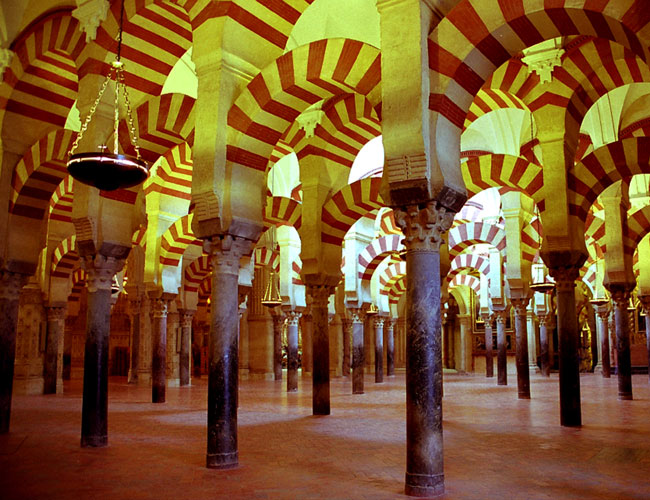
Cordoba is home of the Mesquita, known in most history books as The Great Mosque of Cordoba. The Mesquita was founded in the 8th century and construction began on the old site of a Christian church. In the 10th century, the rulers of the Moorish Iberian Peninsula began making lavish additions to the cathedral which gave the Mosque 23,000 square meters of space and 1293 Moorish arches painted in red and white. Most of the original Moorish architecture remains, however with one addition: a 16th century cathedral added right in the middle of the mosque. As the Christians began taking over Spain and kicking out the Muslims, one of the most powerful ways of showing the superiority of religion was to tear down the mosques and put a cathedral in its place. As a result, the Mesquita is a very interesting piece of architecture as it contains elements of 10 century Moorish architecture as well as elements of a 16th century cathedral. This mosque alone is worth the trip to Cordoba. Don't forget your camera because this Mosque/Cathedral is one of the most picturesque sites in all of Andalucia.

Another great site to see in Cordoba is the Alcazar de los Reyes Christianos (Castle of the Christian Monarchs). At about the same time the cathedral was added to the Mesquita, this castle was built to as a palace and fort for the Christian monarchs. During the Inquisition, this castle was also used as a center for operations. Today it is one of the most beautiful palaces in Andalucia with its gardens, ponds, orange tree patios, and fountains. Nearby is the Roman Bridge which crosses the Guadalquivir river.

If you are interested at all in the literature of Miguel de Cervantes, then you may want to wander to the Posada del Porto. This was the inn where Cervantes resided while writing Don Quixote. In fact, the "den of thieves" in the book was based off this location. It is nothing too spectacular to see but if you've read Don Quixote it may be worth a stop by.

The rest of your time can simply be spent walking around the Jewish Quarter. This medieval neighborhood has narrow winding streets and whitewashed houses. This area makes for some good wandering and a good place to get lost for an hour or two.

Getting to Cordoba from Sevilla is very easy. If you're willing to fork over 40 Euro round trip, then you can ride the high speed AVE train and arrive in Cordoba in about 45 minutes. However, if you're looking for a more student-friendly trip, then the regular train and bus cost around 14 Euro round trip and last 1.5 and 2 hours respectively. Trains and buses run regularly all day so you should have no trouble finding one to fit your schedule.


Sunday, 8 March 2009

Texting in Spanish


In one of the Spanish classes here in Sevilla, we recieved some very helpful information about text message slang in Spain. Spaniards tend to use a lot of short cuts when texting and they can at times be impossible to decipher. Here is a list of codes that you can use to decode a text message you may recieve from someone in Spain.

a2 = adios
1b = un beso
h lgo = hasta luego
ns00 = nos vemos
salu2 = saludos
Xfa = por favor
qtl = ¿que tal?
rll = rollo
skndalo = escandalo
fnmnl = fenomenal
find = fin de semana
hr = hora
ymam = llamame
k hcs? = ¿que haces?
qdr = quedar
slmos = ¿salimos?
tspro = te espero
vaks = vacaciones
qndo? = ¿cuando?
dnd? = ¿donde?
nd = nada
nk = nunca
xa = para
x = por
xq = por que
qn = quien
tb = tambien
t2 = todos
krño = cariño
klg = colega
dsr = desear
br = bar
kf = cafe
+trd = mas tarde
mñn = mañana
nch = noche
zzz = cansado
grr = enfadado
s3 = estres
frt = fuerte
ntnfds = no te enfades
pso = paso
sntr = sentir
t echo de = te echo de menos
tq = te quiero
ygo trd = llego tarde
nph = no puedo hablar
q vrt = quiero verte
nryrse = enrollarse
1bszo = un besazo
crvz = cerveza
kch = coche
dskotk = discoteca
d = de
sty = estoy
stamos = estamos
+ = mas
- = menos
q = que
tmr = tomar

Friday, 6 March 2009

Where to watch soccer in Sevilla

Keeping up with what is going on the the Spanish Premier league is a great way to find common ground when talking with Spaniards. Having a basic knowledge of soccer in Sevilla and in Spain in general is extremely beneficial when trying to make friends. Many times you may find yourself trying to think of different points of conversation. Talking about "futbol" is definitely a popular topic among most Spaniards.

The first place I would recommend watching a soccer game is live at stadium of one of the two professional teams in Sevilla. The two teams in Sevilla are Real Betis and Sevilla FC. I have had luck getting tickets to a Sevilla FC game by simply going to the ticket office at the stadium a few days before the game. If the game is a highly anticipated game, the tickets will likely be more expensive and I would recommend getting to the ticket office farther in advance. You can usually find tickets for around 30 euro. My experience was incredible and I would highly recommend attending a game possible because it is unlike any sporting event in the United States.
Link
If you can't make it to the game, there are still plenty of places to watch on TV. If you don't have access to a TV in your home stay then you may find yourself looking for a sports bar to watch the game. I have created a Google Map (click here) with my favorite places to watch along with a little commentary as to what to expect at each location.

View Larger Map

Thursday, 5 March 2009

Soccer Vocabulary

One thing I've found to be really helpful in sparking conversations with Spaniards is knowledge of Spanish soccer. The people of Spain are die-hard soccer fans making this topic a great conversation starter. I've found a pretty comprehensive list of vocabulary that has helped me in making Spanish friends. In fact, my Spanish speaking parter recently took me to a Real Betis match with her family where I made use of many of these terms. It was an incredible experience that would recommend to anyone visiting Spain.

The Field
  • el campo; la cancha; el terreno de juego = the field, the pitch
  • la mitad de la cancha; el medio de la cancha = the middle/half of the field
  • el area = the penalty box
  • linea de banda = sideline; touchline
  • linea de fondo? = endline; goal-line
  • punto penal = penalty spot
  • manchpunto derecho = right corner flag
  • punto surdo, izquierdo = left corner flag

The Teams
  • la seleccion = usually a national team
  • equipo; conjunto = team
  • equipo visitante = visiting team
  • equipo local = home team
  • las alineaciones; el plantel = the lineups; the roster
  • director tecnico; D.T. = the coach

The Players
  • jugador = player
  • defensor = defender
  • mediocampista = midfielder
  • laterales = wingers
  • arquero; conservero; guardameta; portero = goalkeeper
  • volante; atacante; delantero = forward; striker
  • hombre de punta = usually a lone striker; any forward
  • goleador = a goal scorer, one who scores very often
  • maximo goleador = leading goalscorer
  • hombres de relevo = reserve players
  • lesionado = injured
  • paisano; coterraneo = countryman

The Fans
  • la asistencia = the attendance
  • el publico; los aficionados = the fans
  • tacones; tacos = soccer shoes/cleats/boots
  • pie = foot
  • la barra brava; los fanaticos = the dedicated fans
  • la barra; la tribuna; la hinchada = same as above

Rules and Standings
  • el marcador = the score
  • el comienzo; arranque = the beginning, the start (of the season,of the game,etc)
  • primer tiempo/periodo = first half
  • segundo tiempo = second half
  • tiempo reglamentario = regulation time
  • el arbitro = the referee
  • juez de linea = linesman; line judge; referee’s assistant
  • substitucion = to leave the field (as in substitution)
  • entrar = to enter the field (as in substitution)
  • la temporada; el torneo; el campionato = the season
  • la ligilla; los play-offs = the playoffs
  • la revancha = the second leg in a two-game series or revenge, as in the second time that two teams meet
  • invicto = undefeated
  • carton amarillo; tarjeta amarilla = yellow card
  • carton rojo; targeta roja = red card
  • expulsion = ejection
  • hacer tiempo = to waste time (intentionally)
  • tactico = tactics; strategy
  • abilidoso; muy abil = technical ball skill

Technical Terms
  • la/una jugada; maniobra = the/a play; “handiwork”
  • jugadas de pelota parada = set plays
  • cruce; centro = cross; center (e.g. into the penalty area)
  • lateral; saque lateral; saque de banda = throw in
  • tiro de meta; saque de meta = goalkick
  • tiro de esquina; corner = corner kick
  • fuera de juego; posicion adelantada; offside = offside
  • tiro libre = free kick
  • infraccion = infraction
  • tiro penal; penalty = penalty kick
  • la banca = the bench
  • el cambio = the substitution
  • calentando = warming up (reserve players)
  • en casa = at home
  • visitante = on the road
  • de primera (intencion) = first-time; one-time
  • de chilena = bicycle kick; overhead volley
  • en palomita = diving header
  • de taco = backheel pass
  • remate; disparo = shot at goal
  • completamente desviado = a shot way off the mark
  • bombazo; canonazo; bazookazo = a REALLY hard shot at goal, usually from long distance
  • defenir = to finish (an opportunity)
  • marcar; denotar = to score a goal
  • empatar = to tie/draw
  • cabezazo; golpe de cabeza = header
  • codazo = elbow foul
  • hombrazo = shoulder foul
  • mano = handball
  • abrir la cancha = to open the field (i.e. spread it out to the wings)
  • cambio de frente = a switch of play to the opposite side of the field
  • contragolpe = counterattack
  • al medio; por la mitad = to/through the middle
  • la barrera = the defensive wall during a free kick
  • pase = pass
  • en corto = very short passing; early cross?
  • devolution = return pass
  • despeje = defensive clearance

Describing the Run of Play
  • No hay tiempo para mas! = There’s no time for any more! (end of first half, regulation time, overtime, etc.)
  • Viene, viene, viene! = Here it comes! It’s coming! (a goal)
  • Esta! = “It’s (almost) here!” (a goal)
  • No vale! No vale! = It doesn’t count! (disallowed goal, or when play proceeds a little after the offside call, etc.)
  • Paso Wynalda! = “Wynalda broke through!” en el piso = on the ground (as in keeping the ball low; or as in reference to a fallen player; etc.)
  • de punta y para arriba = of a ball hit long and high (said with a negative tone…)
  • lento = slow
  • totalmente desviado = totally off the mark (a shot at goal)
  • afuera = outside (refers to shots that go wide)
  • arriba = up (refers to shots over the crossbar)
  • buscando el empate = looking for the tie, or striving for the tying goal
  • lo perdise equivoco = he messed up
  • bien = good
  • mal = bad
  • de larga distancia; desde lejos = from long distance
  • correr = to run
  • pedir = to ask for (e.g. the ball)
  • cuidar la pelota = to maintain possession of the ball (by a player or team)
  • recuperar = to regain (the ball)
  • Peligro! = danger! (as during a threat at goal)
  • dejarla/lo = to leave it (the ball) for another player to run onto
  • Lo pego! = he hit it! (at goal)
  • presion = pressure (defensive or offensive)
  • salida = a play bringing the ball out of one’s defensive half
  • desde el fondo = from the back (as in an attack generated by the defense)
  • ganar = to win
  • perder = to lose
  • …que favorese = …”in favor of; for; belonging to (El tiro libre que favorese al Clash… = The free kick for the Clash…)
  • pelear; luchar = to fight (for the ball, for the win, with each other, etc.)

Friday, 20 February 2009

206 BC: Italica


We took a field trip with UPO to the remains of the ancient Roman city of Italica, which is about 20 minutes outside Sevilla. The old city was founded in 206 BC, which is actually buried under the ground under the modern day city of Santiponce.

The “New City” has been unearthed and is open to the public. "New", however, actually means 1,900 years old. Walking through these ruins I found myself wondering what Fort Worth would look like in 2,000 years. It’s pretty mind boggling.

The highlight of the trip for me was the amphitheater, which at one time held over 25,000 spectators for gladiator-like events here. The picture shows only the inner structure of the amphitheater. It was originally covered completely in marble until locals began taking the marble to use in their homes.

The rest of the city was less preserved as only the foundations remain. But the city was a very wealthy one and the size and complexity of the houses was incredible. Additionally, Italica was the birthplace of Roman emperors Trajan and Adrian, who were the first emperors born outside of Rome. This is pretty significant because it shows how Spain influenced the Roman Empire.

This trip to Italica was extremely informative and interesting and I would recommend making it a quick day trip. If you don't catch the UPO field trip there is a bus that runs from the Plaza de Armas bus station at half hour intervals.

Above is a YouTube video I found with photos from Italica.

Sunday, 15 February 2009

Sevici Bike Service

One of my favorite things so far about Sevilla has been the Sevici bike. My only regret is that I didn’t register for one sooner.

The Sevici bike program is a city-sponsored bike rental service that is both extremely convenient and easy to use. For a fee, you can pick up a bike from a Sevici station and ride it across town and park it at any other Sevici station in the city. After your initial subscription fee, the service is free for the first 30 minutes and then you pay a minimal fee for each additional hour after that. Bike pick-up and drop off points are located all over the city. I wish we saw more programs like this in the United States.

The best thing about the service is how inexpensive it is. This costs only 10€ while a seven-day pass costs 5€. It’s definitely worth your money to purchase the yearlong pass.

This service has literally cut off about 30 minutes of my daily commute. I can't stand (pun not intended) riding on the city buses because they're so stop and go it makes me nauseous. I wish the bus drivers here would learn to speed up and slow down a little more gradually. I always have trouble keeping my balance. It's kind of embarrassing. Anyway, now that I've discovered this bike service, I don't have to put up with the buses as much anymore.

Additionally, the city of Sevilla has recently spent a lot of time and money on the creation of bike lanes. I’ve found some great paths along the river and renting a Sevici has proved to be a great leisurely activity for a lazy afternoon.

I'm beginning to sound like a Sevici spokesperson. Thats all for now.

Brett

Website: http://en.sevici.es/ (in English)
Pick-up and drop-off locations: http://en.sevici.es/estaciones/mapa

Saturday, 14 February 2009

Sevilla: The good, the bad, and the ugly

The good:
  1. Siesta: I will never tire of this Spanish tradition. Unlike a lot of places in Spain, Sevilla actually still practices the siesta. Everything for the most part shuts down and its even considered rude to call someone’s house during siesta. It’s nice because you don’t feel guilty or lazy when you take a nap because there really isn’t much else to do between 2 and 5 pm.
  2. Tapas: My favorite is called a croqueta. Essentially it’s a little ball of fried dough and ham or chicken. Incredible.
  3. Running along the Guadalquivir river: It’s very scenic and cuts right through the middle of the city. It's also great to sit along the grassy park beside the river and relax after classes get out. I will definitely miss the river when I leave Sevilla.
  4. Futbol:Everyone in this town is obsessed with soccer from elementary school kids to my fifty year old senora. There is a big rivalry between the two teams in Sevilla. Right now Sevilla FC is ranked third in the Spanish Premier League. I hope to go to a game before I leave.
  5. Teaching English: I teach classes at a local elementary school here once a week and it has been an incredible experience. The kids are always so excited and I enjoy seeing language learning from another perspective.
  6. Orange trees: These line the streets here and even in February they’re covered in bright orange fruit.
The bad:
  1. Oranges from the orange trees: They taste sour and bad. Looks are so deceiving...
  2. Short showers: The Spaniards are really conservative with their water here so I really miss a long hot shower to wake me up in the mornings.
  3. Lack of central heating: It is so hard to get out of bed in the morning. The ice cold tile floors don’t help either.
  4. Weird food: I’ve had enough bean or lentil soup in the last week to last me a lifetime. I’ve found that having a cold/runny nose has given me an advantage because my sense of taste isn’t too keen. A blessing in disguise perhaps? (update: Don't worry, I eventually got used to the food and my house mom has adapted her cooking to fit our taste)
The ugly:
Nothing.